
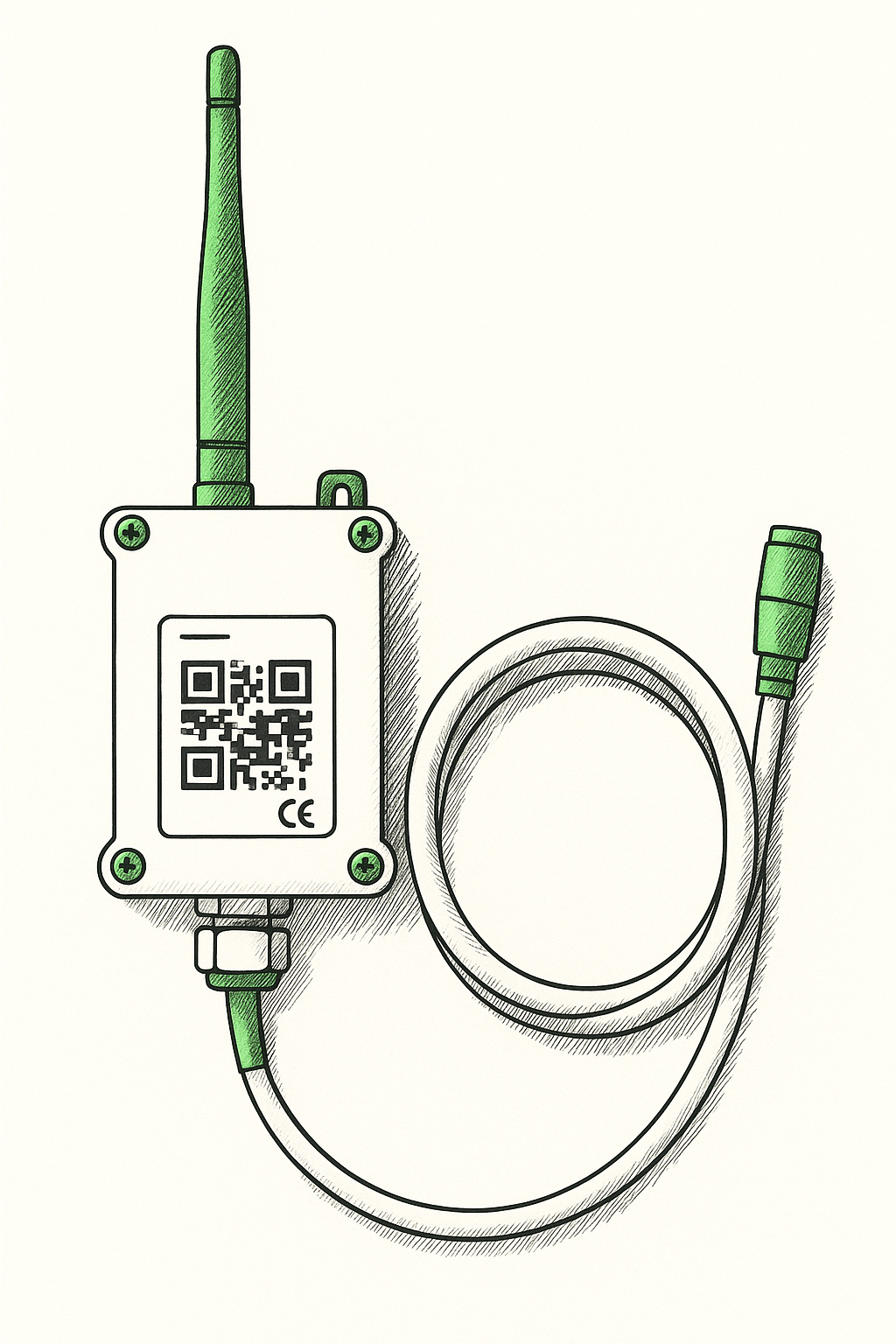
Connectivity, sensors, and the evolving technical framework of XGVRL
While XGVRL is, by design, a data and reporting standard, its development also prompts important considerations about how such data is collected in the field. This includes questions of hardware: sensor types, communication protocols, power supply, and environmental conditions.
At present, XGVRL is being developed to be independent from specific technologies. The framework must be accessible to vineyards operating with minimal infrastructure, while also allowing integration with more advanced digital systems. This is why the architecture is intentionally modular, scalable, and hardware-agnostic.
The current phase of experimentation is based on LoRaWAN (Long Range Wide Area Network) connectivity. This low-power, long-range wireless communication protocol has proven particularly effective for environmental monitoring in viticultural settings. It enables the transmission of data from multiple field sensors to a central gateway without relying on commercial mobile networks, and with extremely low energy consumption — an important factor in remote or off-grid contexts.
A range of sensor categories is currently under evaluation:
- Climate and microclimate
These include air temperature, humidity, rainfall, solar radiation, wind speed, and frost detection. Such indicators are essential for understanding seasonal stress, disease risk, and vineyard resilience. - Soil monitoring
Sensors for soil moisture (at different depths), temperature, electrical conductivity, and, in some cases, pH are being tested to support precision irrigation and soil health tracking. - Water management
Flow meters, tank level sensors, and pump cycle trackers allow for more accurate monitoring of irrigation practices, particularly in water-scarce or urban environments. - Energy and resource use
The setup may include electricity meters, solar output monitors, or indicators of fuel consumption. These help quantify the resource efficiency of vineyard operations. - Plant health and biomass
Where appropriate, we are evaluating tools such as NDVI imagery (via drone or static sensor), canopy temperature measurements, and growth tracking systems, to support advanced agronomic assessments.
It is important to stress that all of these components are under active review. No single sensor configuration is being mandated. Depending on the vineyard’s scale, location, and goals, the hardware setup may vary significantly. New tools may be added; others may be replaced or removed. Flexibility is essential.
At the same time, XGVRL is being structured to accommodate both automated and manual data entry. Vineyards without sensors will be able to complete reports using observational data, estimations, or public sources (such as weather stations). Where sensors are available, integration will be possible via direct input, API, or structured import formats.
The objective is not to promote technology for its own sake, but to ensure that any technology deployed adds value, and that its outputs are natively compatible with XGVRL’s machine-readable format.
We are also exploring integration with existing farm management systems and IoT platforms to reduce duplication of effort and encourage interoperability.
XGVRL is being built with the awareness that sustainability reporting must reflect real conditions in the field, and that technology is useful only when it serves that goal.